
As India prepares to inaugurate one of its largest new aviation hubs, the upcoming Noida International Airport at Jewar is poised to reshape the economic and urban landscape of the National Capital Region (NCR) — far beyond simply adding another runway. Scheduled for opening this month, the airport is expected to generate ripple effects across …
Jewar Airport Set to Supercharge Real Estate and Jobs in NCR
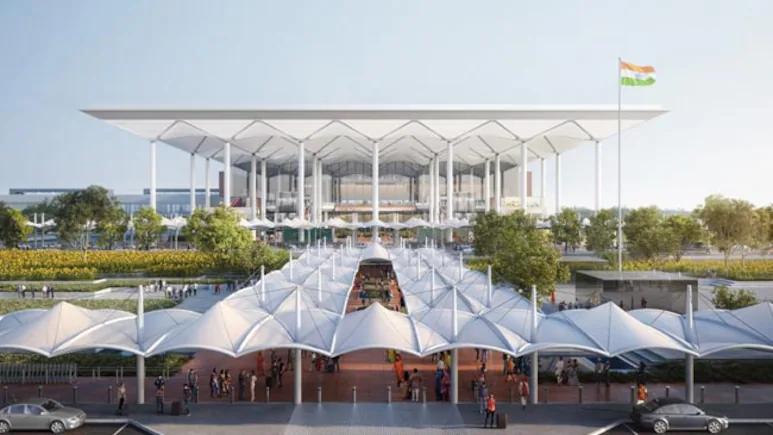
As India prepares to inaugurate one of its largest new aviation hubs, the upcoming Noida International Airport at Jewar is poised to reshape the economic and urban landscape of the National Capital Region (NCR) — far beyond simply adding another runway. Scheduled for opening this month, the airport is expected to generate ripple effects across real estate, employment, logistics and connectivity, redefining how the vast region around New Delhi evolves in the years ahead.
Strategically located about 80 km southeast of Delhi, the airport — set to complement Indira Gandhi International Airport — aims to ease the capital’s aviation congestion while broadening access for passengers and cargo across eastern and western NCR. Experts say this dual-airport configuration could unlock fresh economic corridors and make the larger region more attractive for both domestic and international business.
One of the most immediate impacts has been in real estate. Property prices across the Yamuna Expressway corridor and neighbouring Noida and Greater Noida areas have surged sharply as investors and homebuyers seek early-mover advantage. Recent reports show land and apartment values near major connectivity nodes rising significantly, reflecting confidence that the airport will bring intensified demand for housing — from airport staff to service-sector professionals and logistics workers.
The airport project is also driving plans for commercial and industrial growth. Cities and townships around the airport are attracting proposals for offices, warehouses, business parks and logistics hubs, all designed to capitalise on enhanced connectivity that links NCR not just internally but with the rest of India and global markets. Real estate consultancies suggest such development could transform Noida from a primarily residential and corporate services hub into a multi-sector centre of economic activity.
Beyond bricks and mortar, expectations are high for job creation. While construction jobs remain significant during the final phase of airport build-out, broader opportunities in aviation services, cargo handling, hospitality and transport networks are projected to emerge as operations ramp up. However, some local voices have raised concerns that employment gains may take time to materialise fully at the grassroots level, highlighting a need for targeted skills development in nearby communities.
In the long term, improved connectivity infrastructure — including expressways, proposed rail links, and other transit corridors connecting the airport with the rest of NCR — is expected to support both population mobility and business supply chains, weaving the airport into the fabric of a more integrated metropolitan economy.
With its first phase ready to begin operations, the new airport is not just adding capacity to India’s aviation system — it’s anchoring a broader transformation that could define how NCR competes globally for investment, talent and growth in the decades to come.